When we launched our family child care businesses, we each had different reasons for starting. We also had different ideas on what it would look like and what our role would be. We had different views of our future in this business. But as the years passed, and we made connections in the field and became more involved, we each started to see things for our futures that we had not considered earlier in our careers. Donna Fowler was first at becoming a leader in her state association. Patricia Dischler was first to become a leader in a national organization, and it was here that our paths merged and are now forever forged toward our newest goal: coaching and mentoring others through this often confusing, winding path through a career in family child care.
As we look back on our own paths, we each recognize one central truth: at any point in our journey, we could have chosen to stay at that place and it would have been wonderful. Rather than continue on to new roles, we would have settled in and perfected the one we were in. And in fact, there were stops along the way at which each of us did just that for long periods of time. Because of this, when we looked at how we would now work together to support others in this field, we made one central promise to build upon: we would respect the decision of whomever we worked with, as to where they were and where they saw their path heading. As we figured out what this looked like, we developed a structure to help define and support this work, and the Family Child Care Spectrum© was born.
The Family Child Care Spectrum© is about the different places in a family child care career path. These are not levels of quality; in fact, high quality can and does exist in every sector! Instead, the spectrum is about recognizing family child care business owners for what sector of the field their career is in, and what sector they aspire to be in, even if it is where they are now. Then, it is about attaining the highest level of quality possible within that sector.
In addition to looking at the spectrum, we consider how balanced a participant is, in order to identify areas of stress that may lead to leaving the field, which is now and has always been a concern. We use the analogy of a tricycle: it has three wheels, each with spokes that make it strong. We have identified three areas for quality growth: business practices, educator practices and personal growth and well-being (wheels). Each exists in every sector, with individual quality indicators that make them strong (spokes). Within each sector in the spectrum, we work on building different spokes, or quality indicators. The stronger the spokes, the stronger the wheel, the stronger the tricycle, and the farther it can go! Let’s take a closer look…
Family Child Care Business Owner
This stage is when a person has made the decision to become a legally operating business. They may or may not have been providing care before this moment. They may or may not have any experience or education in this field, but they have committed to running a business and want it to become a strong and successful endeavor. They strive to care for children in a safe manner that meets all their state’s requirements.
Early Childhood Educator
For some, creating the business brings them into the field of early childhood education for the first time, and they realize it is something they love. Some of these child care providers want to go beyond the inherent teaching that occurs when lovingly caring for children and develop a deeper understanding of child development and intentional teaching strategies. For others, they already are educators in the broader field—perhaps working in a center or school—and want to bring what they know into the family child care setting. Both of these examples, and everything in between, mean the family child care business will not only care for children but educate them in an intentional way, with quality curriculum and assessment practices. This stage in particular is very broad—Power to the Profession identified three levels of educator—and all three exist in family child care businesses.
Early Childhood Education Professional
As some providers continue on their journey to becoming educators, they also begin to connect with the broader field of early childhood education. They join local, state, or national organizations. They read books and journals from the field. They advocate for the profession. They see themselves as part of something bigger and want to work to make this a recognized and respected profession. Most who strive for high quality within this sector are inspired along the way to also move deeper into this role, as part of the larger field of family child care.
ADVERTISEMENT

Early Childhood Education Leader
As some ECE professionals become more involved in the broader field, they see that they have the abilities to create change, to motivate and inspire others, to teach colleagues, or to lead organizations. They step into leadership roles at the local, state and national levels. They advocate strongly for the field and work to instill change for improvements.
Beyond Family Child Care
For some, there comes a point where they see a role for themselves outside of their family child care business. Their business was the pathway that supported them as they grew and explored other sectors within this field, and they are now ready to represent this aspect of the field, while moving into positions in other organizations and agencies. Some become leaders of organizations or agencies, others become trainers or coaches, some become advocates, and others run large grant-funded projects. Each is forever impacted by their experience in family child care.
When providing coaching, mentoring, training, and other supports to family child care business owners, it is important to first listen, in order to determine where on the spectrum they are now and where they aspire to go, professionally. It is equally important to respect any decision to remain within a particular sector, and to shift the focus from moving to a new sector to embracing where they are and learning all they can to excel within this place.
The Community Coaching model goes into depth in each sector, truly supporting growth and improvement in applicable topics in each. Using the Family Child Care Spectrum© can help coaches build a respectful and successful relationship with family child care business owners and provide appropriate support for the career path they have chosen. It can also help to eliminate the barriers within a system that are arbitrarily keeping family child care quality low.
For example, we recently worked on a project with a state and found that, while the state had higher education goals for participants, it also had rules in place that made this almost impossible to achieve. There were business practice rules limiting the number of hours substitutes could work at the business, which were keeping participants from attending the classes they needed. By looking at what is needed to excel in each sector, along with the systems that support growth and how they all interact, we were able to design a project and systems-supported plan that ensured success for all.
We are committed to educating the field of early childhood education about family child care and how it fits in this landscape. We feel sharing the Family Child Care Spectrum© is a first step in this endeavor. It’s about separating the business from the person. We do not use the term “provider” in our work. We feel it is a disservice to the range of abilities and possibilities of this field. We support individuals in becoming whatever they wish for in their career: a business person, an educator, a leader and more. Not all family child care business owners are alike, nor do they aspire to be. They do not all have the same destination. But, they all have the ability to be a high-quality option for children and families, in any stage of their career, when provided the proper support.
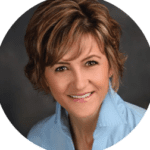
Years ago, Patricia Dischler and Donna Fowler both started family child care businesses. Fowler was already an educator, Dischler decided to become one. Fowler and Dischler became NAFCC accredited, joined their state associations and got involved. Dischler began teaching workshops. Fowler began advocacy work. They each started quality improvement projects for their state associations, then they both became board members of NAFCC, eventually each serving as president. Fowler began creating content and running coaching projects for a leading curriculum company; Dischler began publishing books and conducting trainings on curriculum and business practices, as well as delivering motivational keynotes. Now, they work together to run coaching projects for states, QRIS agencies, Head Start, Early Head Start, school districts and the military, all of which are inclusive of family child care. For more information about them and their company, Community Coaching, visit communitycoachingece.com.

Years ago, Patricia Dischler and Donna Fowler both started family child care businesses. Fowler was already an educator, Dischler decided to become one. Fowler and Dischler became NAFCC accredited, joined their state associations and got involved. Dischler began teaching workshops. Fowler began advocacy work. They each started quality improvement projects for their state associations, then they both became board members of NAFCC, eventually each serving as president. Fowler began creating content and running coaching projects for a leading curriculum company; Dischler began publishing books and conducting trainings on curriculum and business practices, as well as delivering motivational keynotes. Now, they work together to run coaching projects for states, QRIS agencies, Head Start, Early Head Start, school districts and the military, all of which are inclusive of family child care. For more information about them and their company, Community Coaching, visit communitycoachingece.com.
Share this Story
Print Friendly Version

ADVERTISEMENT
Related

ADVERTISEMENT